


Free shipping on every order
Aldridge Gold Trim Wall Light, Black Gold IP65 Waterproof LED Twin Beam Outdoor Sconce for Modern Facade
Aldridge Gold Trim Wall Light, Black Gold IP65 Waterproof LED Twin Beam Outdoor Sconce for Modern Facade
✔ Optical lens keeps both beams defined
✔ Anodised gold trim will not chip
✔ IP65 rated for fully exposed walls
Couldn't load pickup availability
Aldridge Gold Trim Wall Light, Black Gold IP65 Waterproof LED Twin Beam Outdoor Sconce for Modern Facade
Description
Description
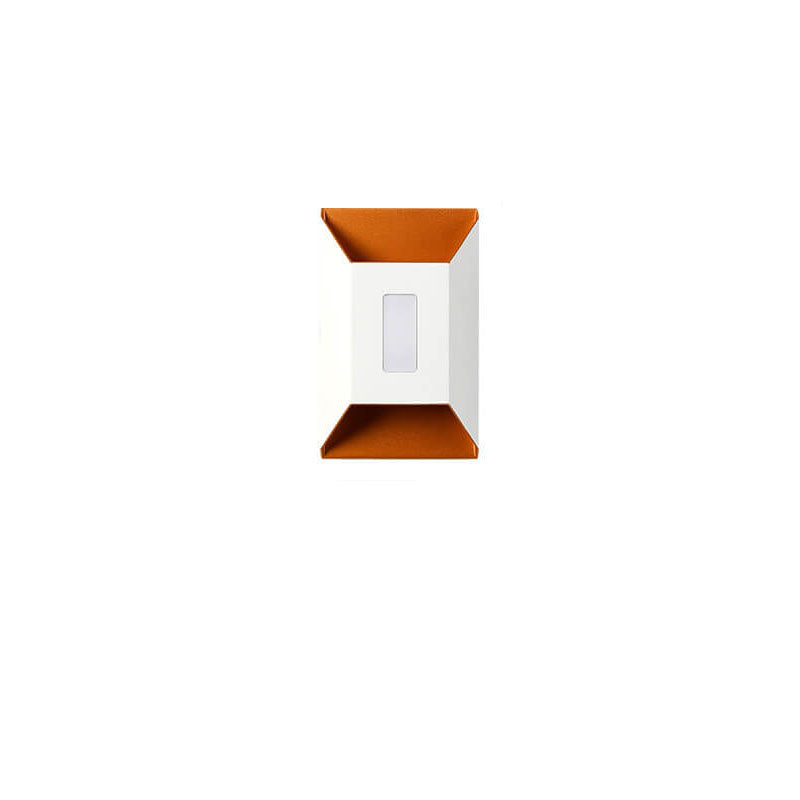
A twin beam wall light in aluminum with an optical lens and a gold trim detail, offered as black with gold or white with gold. The body stands around 20 cm tall, compact enough to sit beside a door or a gate without dominating it. The gold edge is the whole design idea and it catches daylight as well as lamplight.
Two light sources give twelve watts and around twelve hundred lumens, sent up and down through an optical lens that keeps the beams defined rather than spilling sideways. On a textured wall the effect is a pair of clean triangles of light; on a smooth render it reads as two soft columns. Either way the fixture wants a surface for the beams to travel across. The gold trim is anodised rather than painted, so it will not chip.
The supplier rates it IP65, so it can be mounted in full exposure with nothing above it. LEDs are integrated, so there is no bulb to buy. Wiring runs to a switched outdoor circuit. If you are fitting more than one, keep them at a consistent height and space them evenly, because the beam shapes make any variation across a run immediately obvious after dark.
- Material: aluminum with optical lens
- Finish: black with gold, or white with gold
- Size: around 20 cm tall
- Gold trim: anodised, not painted
- Output: 12W, approximately 1200 lumens
- Light sources: two, up and down
- Voltage: 110-120V or 220-240V
- Rating: IP65, full weather exposure
Shipping and Returns
Shipping and Returns
Estimated delivery for this item is 7 to 16 days. Each fixture ships direct from the workshop that makes it, so the window varies from product to product. You will get a tracking number by email as soon as your order is dispatched.
Returns are accepted within 30 days of delivery. Full details are on our Refund Policy page.


More from Brightwell
-
Halden Linear Outdoor Wall Light, Black IP65 Waterproof LED Up Down Wall Sconce for Porch, Patio & Garden Wall
Regular price From $107.99Sale price From $107.99 Regular priceUnit price per$134.9920% -
Slate Flat Panel Wall Light, Ultra Slim Black Silver IP65 Waterproof LED Outdoor Sconce for Passage, Door & Gate
Regular price $99.99Sale price $99.99 Regular priceUnit price per$124.9920% -
Aldridge Gold Trim Wall Light, Black Gold IP65 Waterproof LED Twin Beam Outdoor Sconce for Modern Facade
Regular price $149.99Sale price $149.99 Regular priceUnit price per$187.4920% -
Solstice Solar Ceiling Light, White Solar Shed Light for Workshop, Summerhouse & Garden Room
Regular price $87.99Sale price $87.99 Regular priceUnit price per$109.9920%

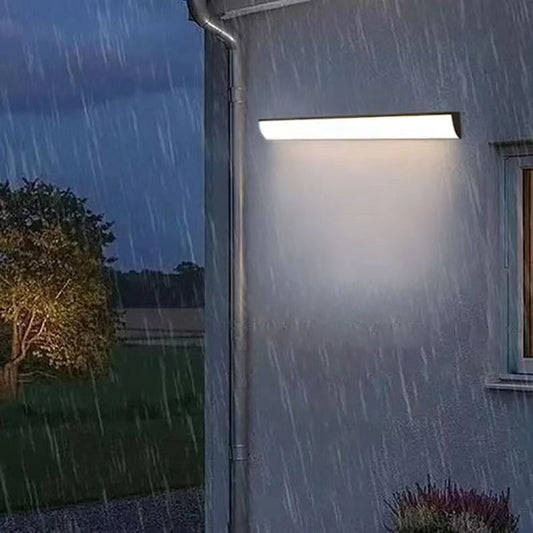

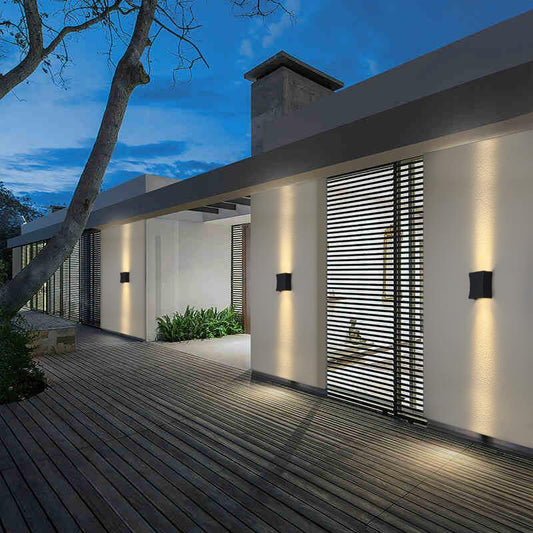

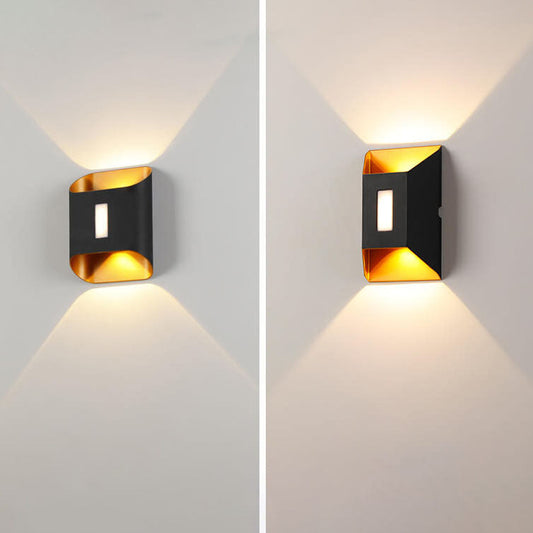


Wants A Wall To Wash
The beams travel up and down across whatever surface they are mounted on. On textured brick the effect is a pair of clean triangles; on smooth render it reads as two soft columns. Either way it wants a surface to work across.

Twelve Hundred Lumens, Two Directions
Two light sources give twelve watts and around twelve hundred lumens, sent up and down through an optical lens that keeps the beams defined rather than spilling sideways. The result is shape on the wall, not a general glow around the fixture.

Gold Trim, Anodised Not Painted
The gold edge is the whole design idea and it catches daylight as well as lamplight. Because it is anodised rather than painted it will not chip, so the detail that carries the design stays intact on a wall that gets knocked.
Frequently asked questions
What is the difference between the two finishes?
Only the colour of the body. Black with gold recedes against dark brick and cladding in daylight, while white with gold suits pale render and light stone. The gold edge, the optical lens and the output are the same on either, so choose on how the body reads against your wall by day rather than on the light it gives after dark.
Which colour temperature should I pick?
Two are offered: Warm Light at 3000K and White Light at 6000K. Warm suits brick, timber and warm render and keeps a facade domestic. White at 6000K is the sharper of the two and suits a grey or white modern facade. Keep one temperature across a whole elevation so the wall reads consistently.
Can it be mounted with nothing above it?
Yes. The supplier rates it IP65, so it can be mounted in full exposure with nothing above it: no porch roof, soffit or overhang needed. That suits a bare modern facade, a gate pier or a stretch of wall where there is no shelter to put a fixture under.
Does it need a bulb?
No. The LEDs are integrated, so there is no bulb to buy and nothing to replace. Output is fixed at twelve watts, around twelve hundred lumens, split between the two beams. Colour temperature is chosen at purchase from 3000K or 6000K, so decide before you order rather than after.
How should I space a run of them?
Keep them at a consistent height and space them evenly. The optical lens gives each fixture a defined beam shape rather than a soft glow, so any variation in height or spacing across a run becomes immediately obvious after dark. Mark the whole line out before drilling the first fixing.